
A small dent might seem like a minor cosmetic issue, but choosing the right repair method can make a big difference to the final result. For many door dings, parking dents and minor panel imperfections, paintless dent removal (PDR) can restore the panel without fillers, sanding or repainting.
However, PDR isn’t suitable for every dent. The location, depth, shape and condition of the paint all influence whether a dent can be repaired using this technique.
So, when is paintless dent removal enough, and when does your vehicle need conventional panel beating? Here’s what Melbourne drivers should know.
What Is Paintless Dent Removal?
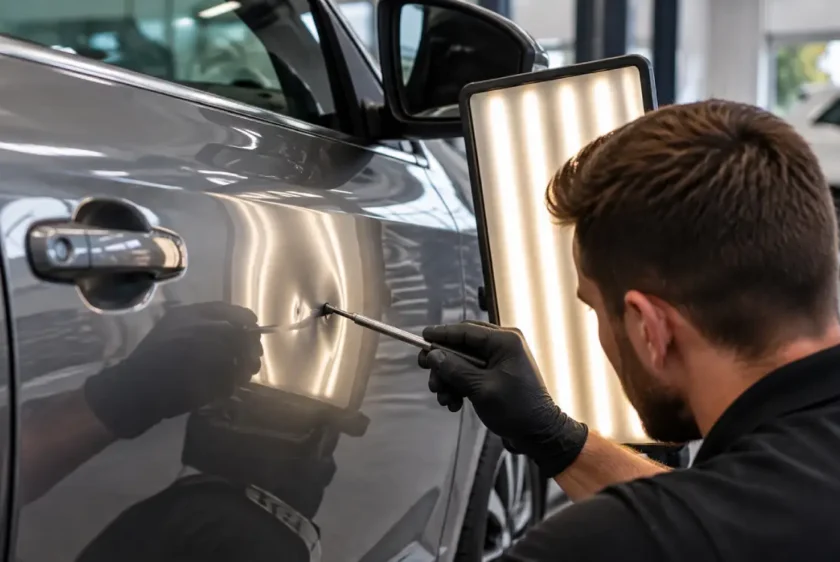
Paintless dent removal, commonly known as PDR, is a specialised technique for removing dents while preserving the vehicle’s existing paint finish.
Instead of sanding the damaged area, applying body filler and repainting the panel, a trained technician uses specialised tools to carefully manipulate the metal back towards its original shape.
Because no repainting is required, PDR can often be completed faster than conventional body repairs. Bridge Road Body Works also notes that the technique avoids paint drying and curing time.
What Small Dents Can Be Repaired With PDR?
PDR works particularly well when the dent is relatively shallow and the factory paint hasn’t cracked or chipped.
Common examples include:
- Shopping trolley dents
- Door dings in car parks
- Minor hail dents
- Small, shallow panel dents
- Minor damage caused by stones or other objects
Bridge Road Body Works specifically uses PDR for damage including hail dents, door dings and car door dents.
For other cosmetic damage, professional minor dent repair may be more appropriate.
How Do You Know If PDR Is Enough?
You don’t necessarily need to know which repair method your vehicle requires before getting a quote. However, there are a few signs that PDR may be suitable.
The Paint Is Still Intact
This is one of the biggest factors. If the paint hasn’t cracked, chipped or separated from the panel, there may be no need to repaint the damaged area.
The Dent Is Shallow
Smooth, shallow dents generally respond better to PDR than sharp impacts that have severely stretched or creased the metal.
The Panel Can Be Accessed
A technician needs suitable access to the damaged area to manipulate the metal effectively. The position of reinforcement bars, panel edges and other components can therefore affect whether PDR is possible.
There Is No Structural Damage
PDR is intended for cosmetic panel damage. If an impact has affected the structure of the vehicle, conventional repairs will be required.
When Is Paintless Dent Removal Not Suitable?
Not every small-looking dent is actually a simple repair.
If the impact has cracked the paint, created a deep crease or significantly stretched the metal, conventional repairs may produce a better result. Damage located along sharp body lines or difficult panel edges can also be more complex.
In these cases, an experienced panel beater Melbourne can assess the damage and determine whether the panel should be repaired, refinished or, in more severe cases, replaced.
The important point is to choose the repair method based on the damage itself, rather than simply the apparent size of the dent.
What Are the Advantages of PDR for Small Dents?
When the damage is suitable, PDR offers some significant advantages.
Preserves the factory finish: Because the panel doesn’t need to be repainted, the vehicle’s existing paint remains intact.
Faster repairs: Eliminating filling, sanding, painting and curing can considerably shorten the repair process.
Less invasive: The repair focuses on reshaping the existing panel rather than refinishing it.
Cost-effective: For suitable dents, fewer materials and repair stages can make PDR more economical than conventional repair methods.
It can also be a particularly effective option for multiple minor dents caused by hail, depending on the severity and condition of the paintwork.
Don’t Ignore a Small Dent
It’s easy to leave a small dent because the vehicle still drives normally. However, it’s worth having the damage assessed—particularly if you notice chipped or cracked paint.
An inspection can establish whether you’re dealing with a straightforward cosmetic dent or damage that requires more extensive attention. Getting the right repair from the beginning can also help maintain the appearance and resale value of your vehicle.
For more information on collision repair techniques and the importance of correct repair procedures for modern vehicles, I-CAR Australia provides industry training and technical resources for the collision repair sector.
Related Articles
Want to learn more before booking your repair? These Bridge Road Body Works guides are also worth reading:
- Smash Repairs vs Mobile Dent Repair: Which Is Better? — understand when minor dent removal is appropriate and when workshop-based repairs are the better choice.
- How Much Does Scratch and Dent Repair Cost in Melbourne? — explore the factors that can influence the cost of repairing scratches and dents.
- What Is a Panel Beater & What Tasks Do They Do? — find out what professional panel beating involves and when it’s required.
Get Your Small Dent Professionally Assessed
A small dent doesn’t always need a major repair. If PDR is suitable, it can be a fast, precise and cost-effective way to restore your vehicle while retaining its original paintwork.
At Bridge Road Body Works, our experienced technicians can assess the location, depth and condition of your dent and recommend the repair method that will deliver the best result. From minor door dings and parking dents to more complicated panel damage, we’ll make sure your vehicle receives the repair it actually needs.
Contact Bridge Road Body Works today or upload photos of your dent for a quote and let our Richmond team help restore your vehicle to its best.